Modern toilets often feature dual flush buttons, yet many don’t realize their purpose beyond flushing. These buttons allow for water conservation: the larger button flushes about 6-9 liters of water for solid waste, while the smaller uses 3-4.5 liters for liquid waste. By using the appropriate button, a household can save up to 20,000 liters of water annually compared to single-flush toilets. Although the initial installation may be costlier, it benefits both the environment and your water bill. Introduced by Victor Papanek in 1976, the concept was first implemented in Australia in 1980.

Related Posts

At a Divorce Hearing During Pregnancy.
Richard did not disappear the way defeated men are expected to disappear. There was no clean exit, no dramatic exile into irrelevance. Instead, he unraveled in layers…
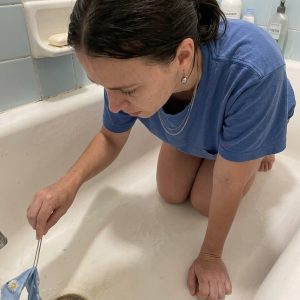
My Teenage Daughter Always Rushed to the Bathroom After Returning From Her Father’s House.
The days after we left Lloyd’s house did not arrive with any dramatic ending or clean resolution, only a slow recalibration of silence that felt unfamiliar in…

My Ex Left Our Family Years Ago and Later Invited Us to His Wedding.
Six months after the wedding disaster, life settled into something quieter for Noah and me, though quiet did not mean easy. The story spread farther than either…

A Toad Appeared Inside My Home and What I Learned Changed the Way I See These Unwanted Visitors.
When I spotted the toad sitting silently beside the laundry room door, I nearly dropped the basket in my hands. Its golden eyes reflected the afternoon sunlight…

I Never Told My Parents Who I Really Was.
The dedication ceremony ended with applause, photographs, and speeches that would appear in local newspapers for a few days before being replaced by newer stories. Yet as…

You’re Not on the List, My Sister Said, Marking a Painful Moment of Family Exclusion During a Wedding Event.
The vineyard stayed lit long after most of the guests had finished eating, as if Alder Ridge refused to acknowledge that anything outside its gates still mattered….