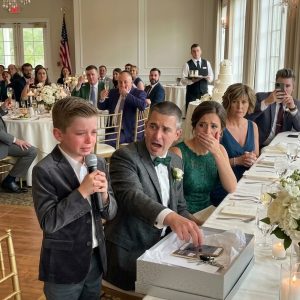
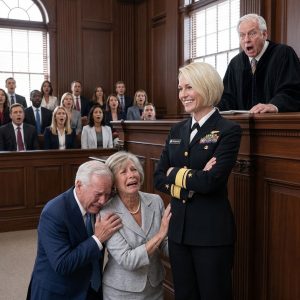
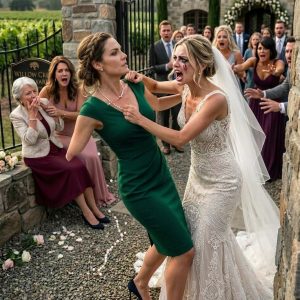
The room seemed to contract around us as if the air itself had grown suspicious. Conversations that had been flowing moments earlier stalled mid-sentence, laughter dissolved into uneasy silence, and the music playing softly in the background felt suddenly inappropriate, almost mocking. My father’s smile wavered, then stiffened, the way it always did when something slipped beyond his control. Laura’s face had drained of color, her hand tightening around the stem of her champagne glass as though it were an anchor. I could feel every eye drifting toward us, drawn not by what had been said, but by the unmistakable shift in atmosphere.
I realized then how fragile celebrations truly are, how easily joy can be punctured when truth demands air. My father tried again, this time with a measured calm that felt rehearsed. He said we were grieving, that grief made people imagine things, that this was neither the time nor the place. But there was something new in his voice, a thin edge beneath the composure, and it told me he understood exactly what we were holding. When I mentioned the will, his eyes flicked—just briefly—toward Laura. That single glance said more than any confession.