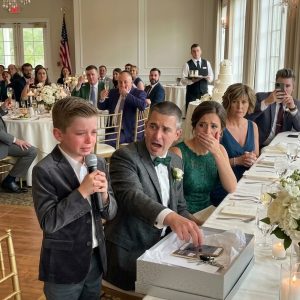
Daniel, my son-in-law, his face carefully arranged into an expression of solemn grief. He spoke softly to distant relatives, and barely looked at me at all. When the service ended and people began filing out, he approached me quietly, his voice low and controlled. He asked me to step aside, away from the others, and then delivered words so cold and precise they cut through the fog of my grief like a blade. He told me I had a day to leave his house.
He explained that the house was legally his, that he needed space, that it would be best if I removed myself quickly. I looked at him, felt something tighten deep in my chest, and smiled. I didn’t argue. I didn’t beg. I didn’t remind him of the years I lived under that roof helping Laura, or the money I quietly contributed when he was still chasing a dream that barely paid the bills. I simply nodded, as if he had asked something reasonable, something ordinary. That smile wasn’t weakness. It was resignation mixed with clarity, the moment I understood that grief and cruelty can exist in the same breath, and that silence can sometimes speak louder than rage.